Infertility & Restorative Reproductive Medicine
Biblical Basis
Technical & Medical Basis
Pastoral Application
Then God said, “Let us make man in our image, after our likeness. And let them have dominion over the fish of the sea and over the birds of the heavens and over the livestock and over all the earth and over every creeping thing that creeps on the earth.” So God created man in his own image, in the image of God he created him; male and female he created them. And God blessed them. And God said to them, “Be fruitful and multiply and fill the earth and subdue it, and have dominion over the fish of the sea and over the birds of the heavens and over every living thing that moves on the earth.”
—Genesis 1:26-28 ESV
In the beginning, God created man and woman in His image and likeness. He blessed them to be fruitful and multiply, referring not only to procreation but also to their work in the world. The command to “be fruitful and multiply and fill the earth” (Gen. 1:28) is best understood as a blessing or promise, directly tied to mankind’s creation in the image of God.
Understanding the Cultural Mandate—as Genesis 1:26–28 is often called—as a blessing rather than a command frees men and women from believing they must produce children by any means necessary. Instead, it invites them to view children as a gift from God, not an achievement of human will.
While Christians affirm the desire for children, they also affirm that life begins at conception—not merely at implantation. Even in their most vulnerable stage, embryos are created in the image of God (Job 10:9–11; Ps. 41:5; 139:13–17; Jer. 1:5; Luke 1:41–44). Therefore, any procedure that destroys or disregards the dignity of embryonic life is morally and theologically abhorrent (Deut. 18:10–14; Eph. 5:3). Such practices should not be found among God’s people.
Anglican ethicist Oliver O’Donovan rightly notes that while God begets the Son of His same nature and substance, He creates man and woman in His image—but of a different nature. He blesses them to beget children (Gen. 5), making procreation a reflection of the Imago Dei. This blessing mirrors the fruitful, relational, and self-giving nature of the Trinity. However, the Bible distinguishes between begetting—of the same nature and substance—and creating—in one’s image, but of a different substance and nature. Men and Women created in God’s image are called to beget children, but O’Donovan warns that certain reproductive technologies may place humans in the position of creating, not begetting, children. Ultimately, O’Donovan argues that Christians are called to receive children, not manufacture them.
Fertility is a central Biblical theme, reflecting God’s intent for procreation in every dimension of life, especially childbearing.
But in Genesis 3, sin fractures the world. Where there was once unity—between God and man, husband and wife, labor and procreation—there is now division. To the woman, God said, “I will surely multiply your pain in childbearing” (Gen. 3:16). The Hebrew word for “pain” (בְּעֶ֖צֶב) is the same root word used in Gen. 3:17, describing Adam’s toil with the ground. This pain refers not only to physical pain but also to anxiety, hardship, and loss; especially as it relates to our desire and ability to bear children. In verse 16 in particular, the word for pain also includes the connotation of idolatry, hinting at the perennial temptation to idolize and control fertility apart from God.
Throughout Scripture, God’s covenants with humanity often include the promise of children—either through biological offspring or spiritual legacy:
Creation Covenant (Gen. 1:27-28)
The first blessing to be fruitful and multiply.
Noahic Covenant (Gen. 6, 9:1–13)
A retelling of the Creation blessing, renewing the call to fill the earth with children and to steward it well.
Abrahamic Covenant (Gen. 12, 15, 17)
God promises Abraham countless descendants through whom the nations will be blessed.
Mosaic Covenant (Deut. 28)
A reversal of the curse, promising fruitfulness of the womb, land, and flocks.
Davidic Covenant (2 Sam. 7)
God promises a son from David’s own lineage whose kingdom will endure forever.
New Covenant (Jer. 31:31–34; Matt. 28:18–20)
Jesus fulfills the covenant promises and commands spiritual multiplication through disciple-making.
While childbearing plays a key role in each covenant, it is not the only way God builds legacy. Jesus, Paul, and many others show that spiritual parenthood and legacy are central to God’s redemptive work, even for those called to singleness.
Remarkably, many of the Bible’s central figures struggled with infertility—Abraham and Sarah, Isaac and Rebekah, Jacob and Rachel.
- Abraham and Sarah acted in fear, using Hagar, Sarah’s servant, to fulfill God’s promise. This attempt outside of God’s design brought pain and conflict.
- Isaac and Rebekah turned to prayer, and God answered them, as He did with Elkanah and Hannah.
- Jacob and Rachel, desperate for children, used mandrakes and her servant Bilhah. Though she bore two sons, her story underscores that it is God who opens and closes the womb.
As Ligonier Ministries notes:
“No matter what Rachel tried with her maidservants or mandrakes, Leah was still given more children… We must accept the truth that God dispenses His benefits in the way He sees fit.”
-Ligonier Ministries
The temptation to idolize fertility plagued Israel throughout the Old Testament. Worship of Asherah, a fertility goddess, reflected a desire to control fertility through pagan practices. In doing so, Israel rejected God’s provision, and faced judgment for their idolatry. Their pursuit of fruitfulness—of children and crops—apart from God only led to brokenness.
Yet, Infertility is not the end of God’s story.
God remains sovereign and compassionate. Moreover, God does not leave His children to wait passively. As Psalm 127 and 128 outline, God equips men and women with wisdom to discern biblically sound next steps to address their infertility.
In all this, it is important to remember:
-
- Fertility is God’s idea. Sin introduced brokenness into the gift of procreation, bringing strife, loss, and difficulty into the experience, but it remains part of God’s good design.
- “Unless the LORD builds the house…” Desiring children is natural and good within marriage. Yet efforts to control conception—whether through natural or artificial means—can become vain if they ignore God’s sovereignty. He alone grants children (Ps. 127:3). As O’Donovan says, children are not an act of the will, but a gift received with open hands.
- Infertility can bring shame. It is a painful reminder of the world’s brokenness. Yet this shame is not from God. As bioethicist Gilbert Meilaender notes, Jesus refutes the idea that suffering is always linked to sin (John 9:1–3). Infertility is not judgment, but a sign of the world’s fallenness; that all is not as it should be. Indeed, infertility is not sin itself but a result of sin entering the world.
- “Blessed is everyone who fears the LORD.” (Ps. 128:1) If Psalm 127 warns against vain striving, Psalm 128 commends reverent trust. Indeed, the fear of the Lord is the beginning of wisdom (Prov. 1:7). Wisdom is active—seeking God, discerning His will, and responding faithfully. James promises that God gives wisdom generously to all who ask (James 1:5–6). Thus, Christian couples facing infertility are called not to passivity, but to faithful discernment, grounded in Scripture and guided by godly wisdom.
Infertility may never be fully resolved or explained, even in Scripture. But we can trust that God is present and active in our pain. He may not grant biological children to every couple, but He promises to be with them, to give wisdom, and to fulfill His purposes in ways often beyond our understanding.

Technical & Medical Basis
Infertility from a medical and technical perspective
Infertility
When healthy, the natural state of a man and woman’s body is fertile–even though there are only certain days each month that a woman can conceive a child. Infertility, by contrast, occurs when specific conditions or factors make it difficult or impossible for a man and woman to conceive and bear a child.
Notably, infertility is not a standalone disease. It is a symptom of underlying reproductive health conditions or factors such as a person’s age or the lack of viable reproductive body parts due to injury or at-birth (genetic) defects (though these are rare).
Doctors typically diagnose a couple with infertility after 6-12 months of barrier-free intercourse. This does not mean that it is impossible for a couple to get pregnant, but it does mean that it will be very difficult, especially without proper treatments.
For women, reproductive health conditions include endometriosis, adenomyosis, polycystic ovary syndrome (PCOS), blocked fallopian tubes, uterine fibroids, hormonal imbalances, body fat percentages (either too high or too low), and other lifestyle factors.
For men, reproductive health conditions include low sperm count, low sperm motility, erectile dysfunction, and diet, lifestyle, and environmental factors.
While it is common to think of infertility as a “woman’s problem,” men and women on the whole bear the burden of infertility equally, with one-third of cases due to women, one-third due to men, and the remaining one-third due to combined causes.
Studies estimate that a couples’ diagnosis of infertility results from four or more reproductive health conditions, underscoring the need for comprehensive diagnostic approaches. Indeed, there is no one-size-fits-all solution to infertility.

Key Approaches within RRM
RRM draws upon various methods for understanding and managing fertility. These include:
NaProTechnology (Natural Procreative Technology):
Developed by Dr. Thomas Hilgers at the Pope Paul VI Institute, NaPro uses the Creighton Model FertilityCare System to chart a woman’s cycle and guide medical diagnosis. It addresses hormonal imbalances, ovulation disorders, endometriosis, polycystic ovary syndrome (PCOS), and more through targeted, ethical medical and surgical interventions.
Creighton Model Fertility Care System:
A standardized, medically integrated form of fertility charting that relies on observing cervical mucus. It provides a shared language for both couples and medical professionals and is the diagnostic foundation for NaProTechnology.
Billings Ovulation Method:
One of the oldest and most researched methods, Billings trains women to identify their fertile and infertile phases by observing changes in cervical mucus, without requiring internal exams or temperature tracking.
FEMM (Fertility Education & Medical Management):
A newer method combining fertility education with hormone-focused health care. FEMM incorporates detailed hormone testing and seeks to address women’s reproductive and overall health through medical treatment based on cycle biomarkers.
FACTS (Fertility Appreciation Collaborative to Teach the Science):
Founded by Dr. Marguerite Duane, FACTS is a clearinghouse of evidence-based research and education on fertility awareness-based methods (FABMs). It aims to educate medical professionals on the scientific underpinnings of FABMs and their clinical applications. FACTS also helps promote informed consent and patient empowerment through education.
Each of these models empowers couples to understand fertility as a vital sign of health. They encourage couples to work with their bodies rather than against them, and they open the door to holistic healing and integrated care.
Restorative Reproductive Medicine
Restorative Reproductive Medicine (RRM) is a scientific and evidence-based approach that seeks to identify, diagnose, and treat the root causes of infertility, restoring normal reproductive function where possible. Rather than bypassing reproductive issues, RRM works to improve overall health, increase fertility potential, and support natural conception.
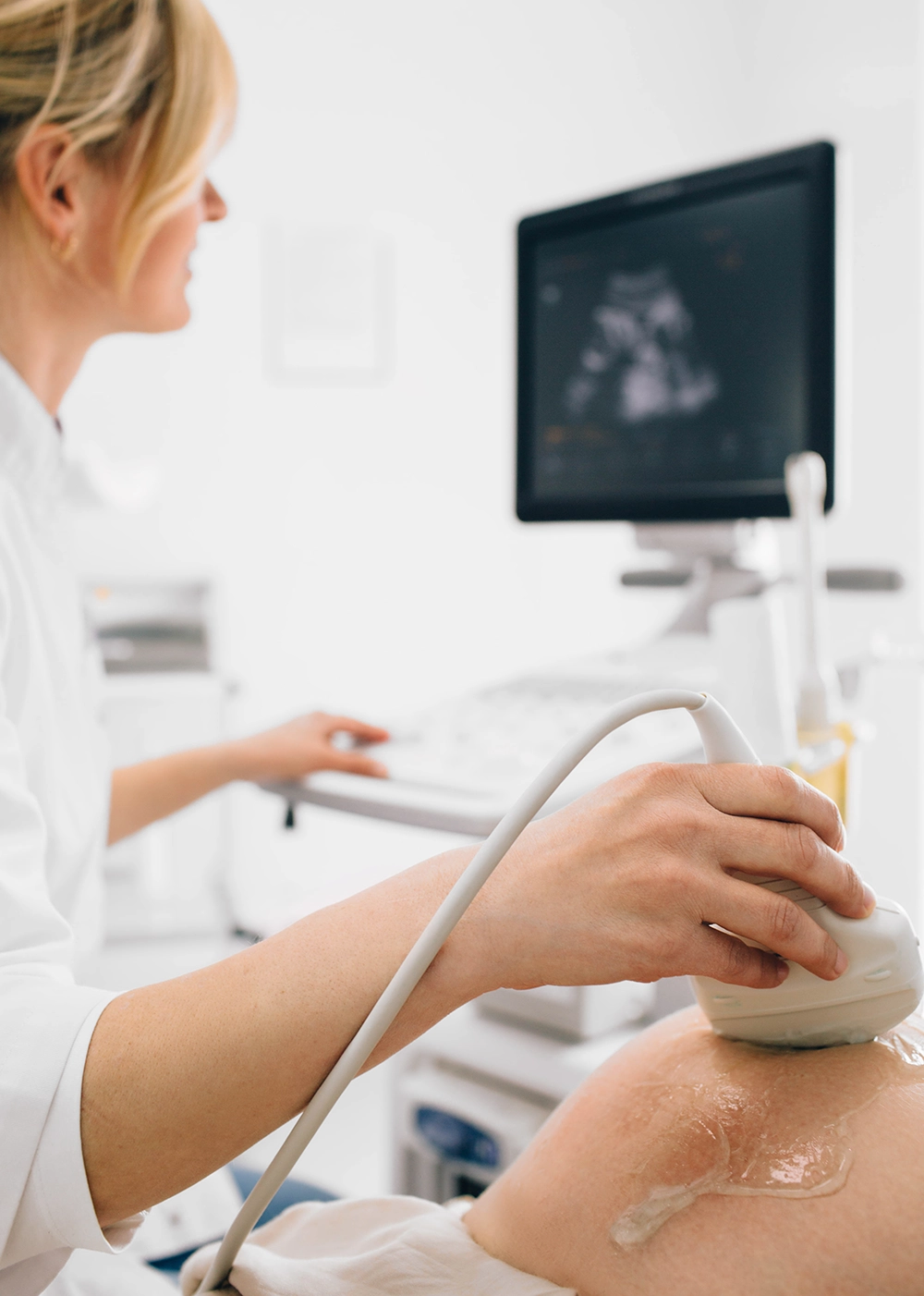
Treatments may include ultrasounds, blood tests, hormone panels, laparoscopic and exploratory surgeries, examining the man’s or woman’s overall health and lifestyle, eliminating environmental endocrine disruptors, and assessing the health and fertility of the individual’s partner. While methods to identify, diagnose, and treat infertility with RRM vary, prominent options include Natural Procreative Technology (NaProTechnology), fertility awareness-based methods (FABM), menstrual cycle charting, and other fertility education and medical management options.
The success rates of RRM are comparable to or greater than other approaches, too. One study found that 41% of couples previously diagnosed with infertility conceived naturally after undergoing RRM-based treatments, compared to the overall average of 25% success rate with IVF.¹
In another study, 32% of women who had an average of 2x failed IVF cycles, conceived naturally following targeted medical interventions with RRM. In particular, the study noted that
These women had significant negative predictive characteristics for healthy live birth including: advanced reproductive age (average 37 years), an average of 5.8 years of infertility with 2.1 (range 1–9) previous IVF attempts, with only 5% having previously had a live birth from IVF. Despite these undesirable prognostic indicators, the overall RRM live birth rate was 32.1%… Women aged 35–38 had a live birth rate of 37.5%… and older women over 40 had a live birth rate of 27.4%.²
These results mirror other studies assessing the effectiveness of RRM to achieve live birth rates.
In a large Irish study of 1,239 couples³, most of whom had been trying for more than one year to conceive, Natural Procreative Technology (NaPro Technology) treatments—a medical specialty that uses fertility awareness-based methods to identify and medically, surgically, and hormonally treat underlying causes of infertility—achieved a 52.8 percent cumulative live birth rate over two years, with the highest success among younger couples.
RRM goes beyond childbearing goals and may treat other difficult symptoms associated with reproductive health conditions, including hormonal acne, hormonal weight gain, hormonal mood and depression, painful periods, painful flare-ups, bloating, inflammation, heavy periods, irregular periods, nerve pain, bowel symptoms, pain during sexual intercourse, and back pain.


Medical Devices/Tools
Many innovations in medical devices also offer couples or individuals more opportunities than ever to steward their fertility.
- Oura Ring – A smart ring that tracks temperature trends, heart rate variability, and sleep patterns; it partners with the Natural Cycles app (FDA-cleared) for fertility prediction.
- Natural Cycles – An app-based fertility tracker that uses basal body temperature and optional Oura Ring integration to predict fertile days; it’s the first FDA-cleared birth control app.
- Tempdrop – A wearable sensor worn on the upper arm during sleep that tracks and learns your unique basal body temperature patterns to help predict ovulation.
- Ava Bracelet – A wrist-worn device used overnight that monitors physiological parameters like skin temperature, resting pulse rate, and breathing rate to detect the fertile window.
- Daysy Fertility Tracker – A standalone basal body thermometer with built-in algorithm that calculates fertility status based on daily temperature readings and menstrual cycle data.
- Mira Fertility Tracker – A handheld hormone analyzer that tests urine to measure hormone levels like LH and estrogen for precise ovulation tracking.
- Inito Fertility Monitor – An at-home device that attaches to your smartphone to analyze multiple fertility hormones in urine, offering lab-grade hormone tracking for conception planning.
- Kegg Fertility Tracker – A smart intravaginal sensor that analyzes cervical fluid using electrolyte measurements to predict fertile days; it also doubles as a Kegel trainer and provides personalized insights via a mobile app.
Pastoral Application


Ultimately, it is God who opens and closes the womb. In His wisdom, He has given humans the gift of medical knowledge and technological insight to help identify, diagnose, and treat the underlying causes of infertility. While not every method of achieving pregnancy is morally or ethically acceptable, the use of licit means to seek healing and restoration can be a faithful response to the challenges of infertility. These treatments are not a substitute for God’s sovereignty—they are tools to be used with discernment and humility. For every couple, the journey through infertility must be rooted in Scripture, guided by prayer, and grounded in trust in God—regardless of the outcome.
God is the Author of Life—Not Technology
Scripture consistently affirms that God alone opens and closes the womb (Gen. 29:31; 30:22; 1 Sam. 1:5–6). While infertility is a result of the Fall, it is never framed in Scripture as a punishment or personal failing. Rather, it is a sorrow that God sees, honors, and often redeems—even when that redemption does not come through biological children.
As such, no medical treatment, no matter how advanced, can substitute for God’s sovereign hand. Christian couples must begin and end their infertility journey with prayer, scripture, and trust in the Lord, even as they pursue medical assistance. Medical interventions must always be received as tools, not idols; as gifts, not guarantees.
Medicine as a Tool Under God’s Sovereignty
Medicine and technology are not inherently opposed to faith. In fact, God gives His children wisdom, insight, and tools to pursue healing and wholeness in a fallen world. This includes the ability to diagnose and treat the underlying causes of infertility, which Restorative Reproductive Medicine seeks to do.
These features mark a meaningful distinction between RRM and forms of assisted reproductive technology (ART) that create life in vitro, freeze or discard embryos, or involve third-party reproduction—practices that raise serious theological and moral concerns about human dignity, the meaning of parenthood, and the sanctity of marriage.
Wisdom, Not Control, Must Guide Treatment Decisions
Psalm 127 warns that “unless the LORD builds the house, those who build it labor in vain.” A Christian approach to infertility must be marked by wisdom, not control; faith, not fear. As Proverbs 1:7 says, “The fear of the Lord is the beginning of wisdom.” This wisdom is not passive or fatalistic but active—rooted in God’s Word and discerned through prayer, Christian counsel, and ethical clarity.
James 1:5 encourages believers to ask for wisdom, and God promises to give it generously. This wisdom should guide couples in evaluating:
-
- Whether and when to seek medical treatment
- Which technologies to pursue or avoid
- How to honor God with their bodies, marriage, and desires
- How to wait on the Lord, even when the path is unclear
The Moral Limits of Human Intervention
Just because something is technically possible does not make it ethically permissible. As Oliver O’Donovan reminds us, there is a difference between begetting and making. Christians are called to receive children, not manufacture them. When reproductive technologies treat children as commodities, or when the marital bond is circumvented, we cross from healing into hubris.
In bioethics, this is often discussed in terms of ends and means. The desire for a child is good, but not every method of achieving that end is morally licit. Christians must discern carefully, asking:
-
- Does this treatment honor the image of God in both spouses?
- Does it preserve the integrity of marriage and the marital act?
- Does it respect the dignity of the child as a gift—not a right or product?
- Is it consistent with biblical teaching on creation, embodiment, and human limits?
These questions do not always yield easy answers, but they must be central to the ethical discernment process.

The Church as a Companion in Suffering
Infertility can be a profoundly isolating experience, especially within church communities that (rightly) celebrate family and children. Pastors and lay leaders must be sensitive, compassionate, and theologically grounded in their care. Infertility is not a moral failure, nor is it a punishment from God. It is a cross that some are called to bear, and the Church must walk with them—not add to their burden.
Christian couples are invited to pursue treatment—such as RRM—that honors God, heals the body, and upholds the dignity of all involved. They are also called to remember that their identity and worth do not rest in parenthood, but in Christ. Whether God grants biological children, calls them to spiritual parenthood, or invites them into other forms of legacy, He is faithful.
As Christian leaders, we must shepherd couples toward hope—not in science alone, but in the God who sees, who heals, and who redeems.
Key Citations and References
Comprehensive Reference List
Citations
- Phil Boyle, Agnes Toth, Monica Minjeur, and Craig Turczynski, “Restorative Reproductive Medicine (RRM) Outcomes Compared to In-Vitro Fertilization (IVF) for the Treatment of Infertility: A Retrospective Evaluation of a 2019 Clinic Cohort Compared to One Cycle of IVF,” Journal of Restorative Reproductive Medicine, Vol. 1 (September 2025), https://doi.org/10.63264/gejytw70 (accessed October 30, 2025)
- Phil C. Boyle et al., “Healthy Singleton Pregnancies from Restorative Reproductive Medicine (RRM) After Failed IVF,” Frontiers in Medicine, Vol. 5, No. 210 (July 31, 2018), https://pmc.ncbi.nlm.nih.gov/articles/PMC6079215/(accessed October 30, 2025).
- Joseph B. Stanford and Ken R. Smith, “Natural Procreative Technology for Infertility and Recurrent Miscarriage: Outcomes in a Contemporary Cohort,” Journal of the American Board of Family Medicine, Vol. 21, No. 5 (2008), pp. 375–384, https://www.jabfm.org/content/jabfp/21/5/375.full.pdf (accessed October 30, 2025).