Abortion
Biblical Basis
Technical & Medical Basis
Pastoral Application
“Do not murder; do not commit adultery; do not practice pederasty; do not fornicate; do not steal; do not deal in magic; do not practice sorcery; do not kill a fetus by abortion or commit infanticide.”
—Didache
Understanding Abortion Through Scripture
Biblical Basis
Abortion is not a new moral challenge for Christianity. The early Church Fathers confronted it directly as one of the first social evils they addressed. In ancient Rome, abortion and infanticide were widespread. Abortion methods included sophisticated drug-induced techniques and surgery, while infanticide, especially of deformed, sickly, or unwanted infants (often girls born to slaves or the poor)—was brutally simple: exposure to the elements or wild animals. Midwives and attendants sometimes justified these acts as social goods or services to the mother.
To the pagan mind, humanity was the measure of all things. Secular thinkers of the age saw no moral conflict in prenatal or neonatal killing as a form of birth control, population control, or quality control of human life. Ironically, pagans accused Christians of ritual infant murder and blood feasts, prompting early Christian apologists to defend the faith by condemning abortion and infanticide. Athenagoras, in his A Plea for the Christians (AD 177), wrote: “How can we possibly kill anyone, we who call those women murderers who take drugs to induce an abortion, we who say they will have to give an account before God one day!”1
Twenty-first-century Christians in America still affirm that we will give an account before God for our actions (Romans 14:12; 2 Corinthians 5:10). Yet some now question whether abortion is a matter that concerns God or requires the Church’s attention. Shouldn’t we simply focus on sharing the gospel and making disciples?
Evangelism and discipleship remain central, but church leaders must recognize that unaddressed sin—including abortion—can block people from a deep relationship with God. The “murderers” Athenagoras described sit in our pews today. These women and men need to hear that God’s forgiveness extends even to those involved in abortion. The Church must address this sin with the same grace and truth it offers for others.
A second reason the Church must speak is that abortion is a profoundly Biblical issue, addressed from Genesis to Revelation. God places extraordinary value on human life because every person is made uniquely in His image (Genesis 1:26-27). We are distinct from the rest of creation and called to steward it (Psalm 8:4-8, NIV):
What is mankind that you are mindful of them,
human beings that you care for them?
You have made them a little lower than the angels
and crowned them with glory and honor.
You made them rulers over the works of your hands;
you put everything under their feet:
all flocks and herds, and the animals of the wild,
the birds in the sky, and the fish in the sea,
all that swim the paths of the seas.
Scripture portrays the meaning and purpose of each human life as beginning before birth.
It often speaks of conception—not birth—as the starting point. God knows, forms, protects, and calls individuals while they are yet in the womb (Isaiah 49:5; Jeremiah 1:5; Psalm 139:13-16). The Hebrew term yeled and the Greek brephos—words used for newborns and young children—are also applied to the unborn, underscoring continuity in God’s view of human life.
God forbids the killing of innocent human life.
The Sixth Commandment is clear: “You shall not murder” (Exodus 20:13). Scripture draws no distinction in human value based on size, age, stage of development, or location (womb or outside it). From conception to natural death, innocent life is sacred.
God also commands His people to protect the weak and vulnerable:
“Defend the weak and the fatherless; uphold the cause of the poor and the oppressed. Rescue the weak and the needy; deliver them from the hand of the wicked” (Psalm 82:3-4).
The call to “carry each other’s burdens” (Galatians 6:2) includes supporting mothers in crisis pregnancies with practical care, resources, and compassion.
A third reason is spiritual: Satan seeks to “steal and kill and destroy” (John 10:10). From Cain’s murder of Abel to Pharaoh’s slaughter of Hebrew boys, to Herod’s massacre in Bethlehem, to the dragon in Revelation 12 poised to devour the newborn child, the enemy has targeted image-bearers of God. Abortion continues this ancient assault on life. At its root, it is not merely political or legal but a battle between life and death, good and evil, God’s truth and the liar’s deception.
Abortion has a long history predating Roe v. Wade (1973). At its core, it is not about rights or laws but about one person claiming the authority to determine the value of another innocent human life. Though the word “abortion” does not appear in Scripture, the Bible speaks clearly and powerfully against the destruction of the innocent.2

Technical & Medical Basis
Abortion from a medical and technical perspective
Abortion
Abortion ends the life of an unborn child and deeply impacts the mother, father, medical personnel, and often extended family and friends. Secular debates frequently pit the mother’s rights against the child’s. In the Church, the question is how we can equip, support, and empower the mother to receive her child as a blessing while honoring both lives.
Research from LifeWay and Care Net (2015) highlights the Church’s critical role. Among 1,038 women who had abortions, 70% claimed a Christian religious preference, and 43% had attended a church service within thirty days prior to their abortion. With roughly 1.1–1.14 million abortions in the United States in 2024, this suggests hundreds of thousands involved women who may have been reachable by a supportive church community.
Many of these women reported that churches seemed more likely to judge single pregnant women (65%) or oversimplify complex decisions (54%) than to offer practical help. Fewer than half believed churches were prepared to assist with unwanted pregnancies, and only about three in ten, thought churches provided accurate information on options.
Most women seeking abortions are not hardened activists or calculating murderers. They are often afraid—fearful of financial ruin, lost opportunities, disrupted education or careers, violent partners, additional children they struggle to feed, or simply the physical and emotional demands of pregnancy. Many fear judgment from others. At crisis pregnancy centers, a common thread is this pervasive fear.
Abortion advocates present it as empowering for women, yet post-abortion testimonies and research reveal significant physical, psychological, relational, and spiritual consequences.
“When I found out I was pregnant, I had just had my sixteenth birthday, and I believed having a baby would ruin the future I had envisioned for myself. While it felt wrong to be able to have an abortion, because it was legal, I thought it must be okay.”
-Canon Georgette Forney, President, Anglicans For Life
Consistent data points on U.S. abortions include:
- Gestational age: The vast majority (over 90%) occur in the first trimester, with most before 13 weeks.
- Reasons: Approximately 1% due to rape or incest, 3% for fetal anomalies, 3% for maternal health concerns, and 93% for elective reasons, including lack of financial or emotional support.
Consequences of Abortion
(Data drawn from the experiences of over 22,000 people in the Silent No More Awareness Campaign and supporting studies):
Physical
Immediate complications can include hemorrhage, infection, uterine perforation, or incomplete abortion.3 Long-term risks include breast, cervical, and ovarian cancer, infertility due to hysterectomies, pelvic inflammatory disease, and miscarriage.4 Abortion can also cause complications during future pregnancies such as premature birth, placenta previa, and ectopic pregnancy.5
Psychological
Many experience regret, depression, anxiety, substance abuse, eating disorders, insomnia, nightmares, relational difficulties, anger, and suicidal ideation. Numerous studies reveal the psychological harm of abortion and indicate that aborting a child can be more damaging than carrying the baby to term.
Mortality
While overall abortion-related deaths are rare, women still die from the abortion procedure and many suffer from complications afterward.6 Studies also show that women with abortion histories have an increased risk of dying from a variety of causes after abortion.7
Spiritual
Many women feel alienated from God, burdened by guilt, or fearful of divine judgment.
Coercion and Violence
A significant percentage (around 64% in some studies) report pressure from partners, family, employers, or others.8 Refusal can lead to abandonment, beatings, or worse.9 Homicide is a leading cause of death for pregnant women, often linked to coercion.10
Relational & Societal
Abortion can damage future relationships, trust, bonding with subsequent children, and a woman’s sense of calling as a life-giver. It has also been linked to patterns of racism and targeting of minority communities. Black and Hispanic women, who represent about a quarter of women of childbearing age, account for a disproportionate share of abortions.11 Planned Parenthood and urban clinic placement patterns have drawn criticism on this point.
Abortion’s Legal Status
Following the 2022 Dobbs v. Jackson Women’s Health Organization decision, which overturned Roe v. Wade and Doe v. Bolton, authority over abortion returned to the states. Laws now vary widely: some states ban most abortions, others permit them through viability or later, and a few allow it with few restrictions. Abortion remains legal at various stages depending on the state.

Types of Abortion Procedures
Procedures depend on gestational age. Since 2016, chemical abortions (abortion pills, primarily mifepristone followed by misoprostol) have risen sharply, accounting for over 60% of U.S. abortions. These are often called medical, at-home, or self-managed abortions.
Abortion Pill Facts:
- The process can be intensely painful and involve heavy bleeding. Women frequently see the expelled remains of their child.
- A major 2025 analysis by Ethics and Public Policy Center of insurance claims for over 865,000 mifepristone prescriptions found serious adverse events (ER visits, hemorrhage, infection, sepsis, or surgery) in approximately 10.9% of cases—far higher than earlier FDA trial summaries suggested.
- 2–7 out of every 100 women require follow-up surgical intervention for retained tissue, which can lead to infection and future complications.12
- Fetal remains are flushed down toilets, releasing pathological waste that enters wastewater systems, raising disposal concerns.
- Abortion pill reversal is possible if the first dose (mifepristone) is taken and the woman changes her mind. Progesterone therapy within 48 hours has saved thousands of babies through programs like Abortion Pill Reversal.

Humanity of the Baby
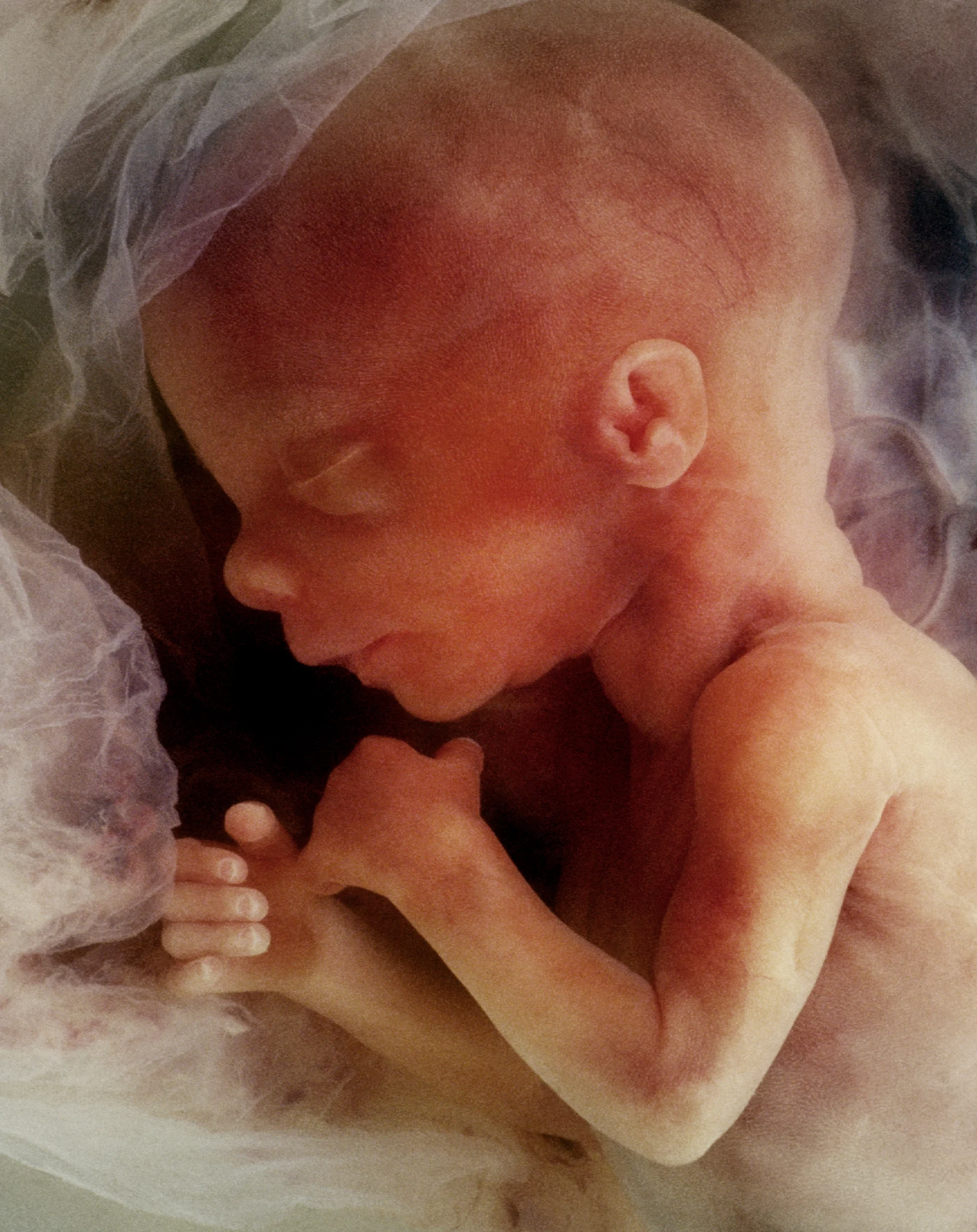
Modern technology—especially ultrasound—reveals the humanity of the unborn. Preborn children respond to stimuli, exhibit unique DNA (distinct from the mother’s, including sex chromosomes), and show evidence of pain perception, possibly as early as 12–18 weeks according to an academic paper that was published in 2019, in the Journal of Medical Ethics titled “Reconsidering Fetal Pain” by two well-credentialed medical professionals, Stuart W. G. Derbyshire and John C. Bockmann. According to Dr. David Prentice, President of the Science Alliance for Life and Technology, “The article is an honest, objective review of the scientific literature as it relates to the question of whether and when a child still in the womb can experience pain. Looking at the scientific evidence, again, with unbiased eyes, the authors’ answer was ‘yes,’ perhaps as early as 12 weeks, and certainly after 18 weeks.”
In other words, unborn babies in the womb, are not “blobs of tissue” but developing human beings with inherent rights grounded in their humanity, not location or development stage. Scripture treats the unborn and born with the same continuity of personhood.
Misinformation about Abortion
Post-Dobbs, some claims have exaggerated or misrepresented state laws, suggesting bans prevent care for miscarriages or ectopic pregnancies. Pro-life laws generally include exceptions or allowances for genuine medical emergencies. Accurate medical care for these conditions is not the same as elective abortion.
Rape and Abortion
While rape and incest pregnancies evoke deep compassion, studies of women who have experienced them (e.g., Victims and Victors) show that abortion often compounds trauma rather than healing it. Many women in these situations report pressure to abort and greater long-term grief. Those who carried to term frequently described their child as bringing peace and purpose. These women need extended grace, counseling, and support—not a secondary trauma.
Men and Abortion
Men are involved in the vast majority of abortion decisions.13 Many suffer in silence with grief, guilt, anger, relational difficulties, and increased risk of self-destructive behaviors, depression, or even suicide. The largest study of men after abortion revealed that most of the participants thought about the abortion years after the procedure, and when the child that would have been born.14 They share grief and shame about their role in the abortion and report feeling guilt, sadness, anxiety, depression, and insomnia.15 When a man is powerless to stop an abortion he does not want or agrees to the procedure and later regrets it, he can be driven to life-threatening despair, symptoms of post-traumatic stress disorder, and even suicide.16 Trust and intimacy can be a struggle leading to dysfunctional and failed relationships.17 The Church must minister to fathers as well as mothers.

Pastoral Application
Additional Resources
- This brochure published by Anglicans For Life® provides complete details related to healing, and counseling after an abortion for women or men.
Statistics suggest you will likely encounter people in your ministry carrying abortion-related pain and guilt. The Guttmacher Institute estimates that about one in four American women will have had an abortion by age 45,18 with a high percentage claiming Christian affiliation.19
Everyone needs to know the forgiveness of the cross, so when someone approaches you with regret:
- Listen compassionately without shock or judgment.
- Pray silently for wisdom.
- Reassure them of God’s unconditional love, using passages like Psalm 103, 1 John 1:8-9, Micah 7:18-19, and Psalm 32:5.
- Acknowledge their pain without minimizing it.
- Emphasize reconciliation with God and their child, encouraging grief as part of healing.
- Grant permission to name and mourn the baby; consider offering a memorial service.
- Offer forgiveness through the gospel and prayer (Healing of Memories prayer can be powerful here).
- Encourage journaling.
- Provide ongoing care and referrals to local pregnancy centers or after-abortion programs.
Additionally, it would be helpful to contact one or two local pregnancy centers and determine whether they offer after-abortion counseling. You may want to maintain a list of such centers, with their addresses and telephone numbers, and make the list available to those women and men who would benefit from continued counseling.
The Healing of Memories (pioneered by Agnes Sanford) involves inviting Jesus into specific painful memories to redeem them through His presence and forgiveness. For abortion, walk through key moments—conception, discovering the pregnancy, the decision, and the procedure—inviting Christ’s forgiveness for self and others. The memory remains, but the shame and pain lose their power.
Preventing Abortion
Prevention begins with church culture. Create an environment of grace where unplanned pregnancies are met with support, not shame. Regularly announce in bulletins and from the pulpit: “If you are facing an unplanned pregnancy, we are here to help with nonjudgmental support. You and your baby are welcome here.”
Partner with local pregnancy resource centers for practical aid (medical referrals, diapers, clothing, parenting classes, baby showers). Include fathers in support efforts. Model the gospel: receiving forgiveness and extending it to others.
Conclusion
After more than fifty years of legal abortion in America, many prefer to frame the issue politically. Yet for the Church, it is first a biblical, moral, and spiritual matter. Scripture declares that God creates every life with purpose, value, and dignity. As Christ’s representatives, we must bear witness—both in the culture and in the pews—that God hates the destruction of the innocent. In every abortion, a child dies, but the ripple effects harm women, men, families, and society physically, emotionally, and spiritually. May the Church be a beacon of truth, compassion, and life-affirming hope in a world that too often chooses death.
Key Citations and References
Comprehensive Reference List
Citations
1Athenagoras, A Plea for the Christians, trans. B. P. Pratten, in Ante-Nicene Fathers, vol. 2, ed. Alexander Roberts and James Donaldson (Buffalo, NY: Christian Literature Publishing Co., 1885). Abortion and the Early Christians by Dael E. Smith Jr. originally published in 1984 by Anglicans for Life under our former name: The National Organization of Episcopalians for Life Research and Education Foundation.
2 Terry Schlossberg, “Thinking Wisely about the Church and Human Life,” Anglicans for Life, accessed April 11, 2026, https://anglicansforlife.org/thinking-wisely-about-the-church-and-human-life/.
3 There is no comprehensive reporting of abortions or abortion complications in the US. The National Institutes of Health uses the figure of 2 percent. If there are 862,495 abortions annually, that would mean 17,248 women would suffer complications. Sajadi-Ernazarova KR, Martinez CL. Abortion Complications. [Updated 2021 May 24]. In: StatPearls [Internet]. Treasure Island (FL): StatPearls Publishing; 2022 Jan-. Available from: https://www.ncbi.nlm.nih.gov/books/NBK430793/.
4 Miech RP. The role of fetal microchimerism in autoimmune disease. Int J Clin Exp Med. 2010;3(2):164-168. Published 2010 Jun 12. The Breast Cancer Prevention Institute has identified sixety-one studies that show a link between induced abortion and breast cancer. https://www.bcpinstitute.org/uploads/1/1/5/1/115111905/bcpi-factsheet-epidemiol-studies_2020.pdf. More research is needed into the possible link between abortion and subsequent infertility. Pike GK. “Abortion and Infertility.” Issues Law Med. 2020 Fall;35(2):173-195. PMID: 33950600.
5 Karami, M., & Jenabi, E. (2017). “Placenta previa after prior abortion: a meta-analysis.” Biomedical Research and Therapy, 4(07), 1441-1450. https://doi.org/10.15419/bmrat.v4i07.197 Thomas Jefferson University. “Prior surgical abortion linked to subsequent preterm birth.” ScienceDaily. ScienceDaily, 3 February 2016. <www.sciencedaily.com/releases/2016/02/160203111155.htm>.
6 Kortsmit K, Mandel MG, Reeves JA, et al. “Abortion Surveillance — United States, 2019,” MMWR Surveill Summ 2021;70(No. SS-9):1–29. DOI: http://dx.doi.org/10.15585/mmwr.ss7009a1external icon and Reardon, David C and John M Thorp. “Pregnancy associated death in record linkage studies relative to delivery, termination of pregnancy, and natural losses: A systematic review with a narrative synthesis and meta-analysis.” SAGE open medicine vol. 5 2050312117740490. 13 Nov. 2017, doi:10.1177/2050312117740490.
7 Marmion PJ, Skop I. “Induced Abortion and the Increased Risk of Maternal Mortality,” Linacre Q. 2020 Aug;87(3):302-310. doi: 10.1177/0024363920922687. Epub 2020 May 12. PMID: 32699440; PMCID: PMC7350112.
8 David C. Reardon, Forced Abortion in America (Springfield, IL: Elliot Institute, 2004), originally published in The Post-Abortion Review 12, no. 2 (July–September 2004).
9 Wallace M, Gillispie-Bell V, Cruz K, Davis K, Vilda D. “Homicide During Pregnancy and the Postpartum Period in the United States,” 2018-2019. Obstet Gynecol. 2021 Nov 1;138(5):762-769.
10. I.L. Horton and D. Cheng, “Enhanced surveillance for pregnancy-associated mortality–Maryland, 1993-1998,” JAMA, 2001 Mar 21;285(11):1455-9. https://pubmed.ncbi.nlm.nih.gov/11255421/.
11 Katherine Kortsmit, Michele G. Mandel, Jennifer A. Reeves, Elizabeth Clark, H. Pamela Pagano, Antoinette Nguyen, Emily E. Petersen, and Maura K. Whiteman, “Abortion Surveillance — United States, 2019,” Morbidity and Mortality Weekly Report: Surveillance Summaries 70, no. 9 (November 26, 2021): 1–29, https://www.cdc.gov/mmwr/volumes/70/ss/ss7009a1.htm.
12 Primary citation: U.S. Food and Drug Administration (FDA). MIFEPREX (mifepristone) tablets, for oral use [package insert]. Revised 2023 (and earlier versions, e.g., 2016). Available at: https://www.accessdata.fda.gov/drugsatfda_docs/label/2023/020687Orig1s025Lbl.pdf (or the 2016 version at https://www.accessdata.fda.gov/drugsatfda_docs/label/2016/020687s020lbl.pdf).
13 David C. Reardon, Forced Abortion in America (Springfield, IL: Elliot Institute, 2004), originally published in The Post-Abortion Review 12, no. 2 (July–September 2004).
14 Arthur B. Shostak and Gary McLouth, with Lynn Seng, Men and Abortion: Lessons, Losses, and Love (New York: Praeger, 1984).
15Kevin Burke, Theresa Burke, and Frank Pavone, Sharing the Heart of Christ: Safe and Effective Post Abortion Ministry for Clergy and Counselors (Staten Island, NY: Priests for Life, 2009).
16 Elliot Institute, “Men, Abortion and Suicide,” TheUnChoice.com, 2006, accessed April 11, 2026, http://www.theunchoice.com/Men/mensuicide.htm.
17Elizabeth Ring-Cassidy and Ian Gentles, “Abortion: Its Effect on Men,” chap. 16 in Women’s Health after Abortion: The Medical and Psychological Evidence, 2nd ed. (Toronto: deVeber Institute for Bioethics and Social Research, 2003).
18 Guttmacher Institute, “One in Four US Women Expected to Have an Abortion in Their Lifetime,” news release, April 29, 2024, https://www.guttmacher.org/news-release/2024/one-four-us-women-expected-have-abortion-their-lifetime.
19 LifeWay Research, Study of Women Who Have Had an Abortion and Their Views on Church, sponsored by Care Net (Nashville: LifeWay Research, November 2015), https://research.lifeway.com/wp-content/uploads/2015/11/Care-Net-Final-Presentation-Report-Revised.pdf.