Disability Ethics
Biblical Basis
Technical & Medical Basis
Pastoral Application
During the time when kings ruled over the people of Israel, the Philistines fought against the people, killing King Saul; his son, Jonathan; and others in Saul’s family. Jonathan’s son, Mephibosheth, was five when his nurse learned of the news. She grabbed Mephibosheth, and he fell, rendering him permanently disabled in both feet (2 Sam 4). Later when David became king, instead of eradicating Saul’s lineage, he sought to bless the remnant that remained. David found Mephibosheth and told him that he would show him lovingkindness for the sake of Jonathan. David told Mephibosheth he would have the land restored to him that belonged to Saul, and he would be given a seat at David’s royal table (2 Sam 9).
Almost buried in the pages of the Old Testament, this story reveals the lovingkindness of God, working through man, to honor, restore, and redeem the disabled. While David could have killed Mephibosheth to eliminate Saul’s lineage, David elevates him to a place of honor at the royal table. Mephibosheth, who was otherwise doomed, experiences a reversal of fortune and is exalted to the highest place. This narrative reveals the heart of God and his extravagant lovingkindness and provision toward people with disabilities. Mephibosheth is an Old Testament example of the New Testament reality of Jesus healing, communing with, and exalting the disabled, reversing their fortune by making the last first and the first last (Matt 20:16).
Indeed, Scripture is full of people with disabilities experiencing God’s reversal of fortune. Jacob’s limp from wrestling with the angel proved to be a sign of God’s covenant with the people of Israel (Gen 32). Moses, despite his speaking disability, was chosen and used by God to confront Pharaoh and lead the Israelites out of slavery (Ex 4:10–12). Paul’s thorn in his flesh (2 Cor 12:7–10) became a manifestation of Christ’s divine power. And a woman with a “disabling spirit” (Lk 13:10–17) revealed Jesus as the Son of God.
Understanding Disability Ethics Through Scripture
Biblical Basis
Christian disability ethics has developed along several major trajectories, each attempting to reconcile theological conviction with human experience. Three especially significant approaches are the Augustinian view, the liberation view, and the contemporary integrative view.
The Augustinian View
The Augustinian view is rooted in the theology of Augustine of Hippo. Augustine’s understanding of creation, fall, and redemption frames disability within the broader drama of salvation history. All human beings are created in the image of God (imago Dei), and therefore possess inherent, non-negotiable dignity. Disability does not diminish this worth. At the same time, Augustine understands bodily impairment as part of the disorder introduced by sin into creation. In his works such as City of God, he insists that what appear to us as bodily “defects” are not outside divine providence. They belong to a creation still governed by God, even in its brokenness. Augustine also anticipates the resurrection of the body, in which human embodiment will be restored to its fullness. While this offers hope, it can create tension: If disability is viewed primarily as a defect to be corrected in the age to come, it risks undervaluing disabled embodiment in the present. Yet the Augustinian framework strongly affirms dignity, dependence on grace, and the equal standing of all people before God.
The Liberation View
The liberation view shifts the focus from metaphysical explanations of disability to social and political realities. Influenced by liberation theology and the disability rights movement, this approach argues that much of what we call “disability” is socially constructed. Physical impairments exist, but it is unjust structures—stair-only buildings, exclusionary education systems, discriminatory hiring practices, and stigmatizing attitudes—that disable people. Drawing inspiration from authors such as Gustavo Gutiérrez, liberation theology insists that God has a preferential concern for the poor. In this light, disability ethics becomes a matter of justice rather than charity. The church is called not merely to care for disabled people but to dismantle ableism and amplify disabled voices. Disabled individuals are not objects of ministry but agents of theological insight and ecclesial leadership. The strength of this view lies in its insistence on accessibility, rights, and structural reform. Its challenge is integrating this justice-centered framework with classical doctrines of sin, redemption, and hope without reducing theology to activism.
The Contemporary Integrative View
The contemporary integrative view—often associated with theological disability studies—seeks to hold together classical Christian doctrine and modern disability insights. Scholars such as Amos Yong and Nancy Eiesland reread Scripture through the lens of disabled experience. Rather than assuming disability is only deficit, they explore how it reveals human interdependence and divine grace. This view reflects on the resurrected Christ who retains his wounds (John 20), suggesting that glorified embodiment may include markedness rather than erase it. This approach reframes disability not simply as a problem to solve but as a dimension of human diversity that can deepen the church’s understanding of community, vulnerability, and communion. The integrative model affirms medical care and healing while also honoring disabled identity and agency. It attempts to avoid both reduction to tragedy and romanticization of suffering.
The Christian response must be love expressed in commitment. It is our responsibility to honor the image of God in every human being, to remove barriers where we can, to advocate where injustice persists, and to cultivate communities of belonging. Whether one emphasizes fall and redemption, structural justice, or integrative theology, the moral imperative remains the same: to love God and our neighbor.

Technical & Medical Basis
Disability Ethics from a Technical and Medical Basis
Utilitarianism
For the Christian, the cross is our ethic. We treat the disabled as Jesus did, praying for healing, extending love and compassion, and recognizing their human dignity because they bear his image. But because we are in the world and not of the world, we face secular ethics: ethics that devalue the intrinsic worth of people with disabilities. Most commonly, this ethic surfaces as utilitarianism, with the fundamental axiom of “the greatest happiness of the greatest number that is the measure of right and wrong.”¹ Pragmatically this means making ethical choices based on what will benefit the whole of society, the collective. Under this ethic, people quickly become disposable if they no longer serve society or drain medical resources.
Utilitarianism influences much of secular medical ethics today. Hospitals have limited resources, and people with disabilities are viewed as taking resources from so-called healthy people who are said to need them more. As a point in fact, my godson was born prematurely with a heart defect. While he clung to life in the NICU, his mother overheard one of his doctors say, “I don’t know why we keep kids like this alive.” Suggesting that my godson, because of his disability, ought not to have been helped or received medical intervention. My godson is now seventeen, and he is a happy, talented teenager with a pacemaker.
Utilitarian ethics are not exclusive to the medical field though. This philosophy is in the ether of society and many people, Christians and non-Christians alike, make decisions using a utilitarian framework without even having awareness of it.
Beginning-of-Life Utilitarian Ethics
With the advent of medical technologies, some disabilities can be detected before a child is even born. Or in the case of in vitro fertilization and preimplantation genetic diagnosis, embryos can be genetically evaluated to find predisposition to disease, and then discarded, meaning they are killed, if certain undesirable genetic factors are found. The same is true if undesirable conditions, such as Down syndrome, are discovered in utero. About 67% or 85% of people with Down syndrome are aborted, never getting the chance to live.²
In utero, the lives of disabled people are viewed as either not being a life, too small of a life to matter, too difficult to care for if allowed to live, or unworthy of life. However, the size of a person or the suffering they potentially could encounter has no bearing on their right to life.
Their life is deemed “optional,” with the mother getting to choose life or death based on wantedness. Further, terminating the life of the disabled person is often viewed as a responsibility to society so that they do not become a drain on scarce resources. This “choice” is heralded as brave and courageous, twisting truth into a lie that says life is optional, death is good, and termination is a courageous and loving choice.
Likewise, people with disabilities face similar utilitarian philosophies at the end-of-life.
End-of-Life Utilitarian Ethics
A Christian friend of mine was eminently dying from a disability. He made a public Facebook post that said he was going to seek physician-assisted suicide if his pain worsened. He passed away shortly after that post, thankfully without pursuing physician-assisted suicide. However, this is a common utilitarian response when someone with disabilities approaches the end of their life, especially when there is pain and suffering.
Oftentimes, the argument for hastening the death of the disabled hinges on claims that the person lacks a good quality of life, contributes little or nothing to society, consumes scarce medical resources better allocated to the “healthy,” and possesses an autonomous right to die. Some take the argument even farther and hold that the disabled person has a “duty to die” since they are sapping scarce medical resources. Under these rationales, physician-assisted suicide and euthanasia are morally permissible. Since the disabled person is eminently dying, suffering, and draining resources, it is thought that hastening death is merciful.


The Christian Response to Beginning- and End-of-Life Utilitarian Ethics
It’s tempting to be persuaded by utilitarian arguments; however, as Christians we have a more robust ethos for understanding disability and a more robust theology of death. Our lens is much wider than the myopic, one-dimensional utilitarian lens.
Firstly, death is never a good. It is always an evil. It should never be promoted or encouraged as an acceptable way to divert suffering.
We can accept suffering. When suffering happens, we can bear that pain because we walk in the way of the cross and remember Christ’s suffering, suffering that even God did not save his Son from. A great mystery is that we are united with Christ in our suffering (Rom 8:17, 2 Cor 1:5, Phil 3:10, 1 Peter 4:13). We don’t have to be afraid when we or when someone we love is faced with suffering and even death from a disability. We can and should walk with them in their pain. Suffering yields our sanctification, and we can trust God with another person’s sanctification through suffering. It is not our prerogative to remove the pain of suffering by hastening death or directly causing death. We can, though, provide comfort care.
Likewise, a disabled person may experience a so-called poor quality of life, but this is not a justification for death. Firstly, as we just saw, there is meaning in suffering. Secondly, we cannot act in the place of God who decides when a person’s suffering should be removed. Thirdly, a so-called poor quality of life is subjective and mutable. Human beings do not have an adequate perspective to make judgments on what constitutes a “bad” quality of life. That is a perspective only God in his sovereignty holds.
Hastening the death or directly killing a disabled person (or any person) is murder. This is often justified through “mercy killings” or through the idea that a person possesses an autonomous right to die. One day my coworker said to me, “I just think people ought to be able to decide that for themselves,” meaning decide their death for themselves. It is never merciful to kill anyone. Death is an evil, and it should never be promoted. True mercy and compassion is walking with someone through the horrifying parts of life that include suffering, pain, disfigurement, and more. True mercy is helping one another in weakness and interceding with the Holy Spirit in “groanings too deep for words” (Rom 8:26–27).
If we rely on utilitarian ethics and hasten death or directly kill in utero, we preclude God’s plan and purpose in someone’s life. Though disabled from the age of five, Mephibosheth, had purpose and meaning in his life. Moreover, he was used to glorify God in a magnificent way by revealing God’s lovingkindness toward people who were deemed undesirable by society.
Many think that death is better, especially for the unborn, because they will not have adequate financial resources. God’s economy and provision, as evidenced though Mephibosheth’s reversal of fortune, can be miraculous. In the same way King David provided for Mephibosheth, God can appoint means of grace in a disabled person’s life to provide for their needs. This could come through family, community and governmental resources, and most importantly through the church. And it is through the church that we can participate in the work of the Lord as ministers of his grace to the disabled.
Moreover, God may choose to glorify himself through healing a disabled person or glorify himself through medical technologies and medical staff to provide healing or alleviation of suffering. However God chooses to work, Scripture is clear that his glory is revealed through the disabled, and we should welcome anyone with a disability because we are welcoming Christ (Matt 10:40).
As we have seen, disabled people are far more susceptible to discrimination in our society, and we must advocate for everyone with a disability. It is our duty to walk with them through pain, suffering, weakness, discomfort, and disease. Further, people with disabilities are no less deserving of medical access and resources because of their medical status or diagnosis and should not have appropriate medical treatment withheld. Finally, even if death is eminent, we do not have license to justify death, even if it is our own.
All human life is valuable. And as Christians, this is not a mindless platitude, but it is the theology our creator has given us, who humbled himself, took on flesh, and understands our frailty. Most importantly, we are created in the image of God, and there is nothing, no physical limitation, that can remove God’s image from us. Ultimately, God’s lovingkindness toward the disabled is a greater ethic than utilitarianism because we understand the true value of life, even a life such as Jesus’ filled with suffering.
Pastoral Application

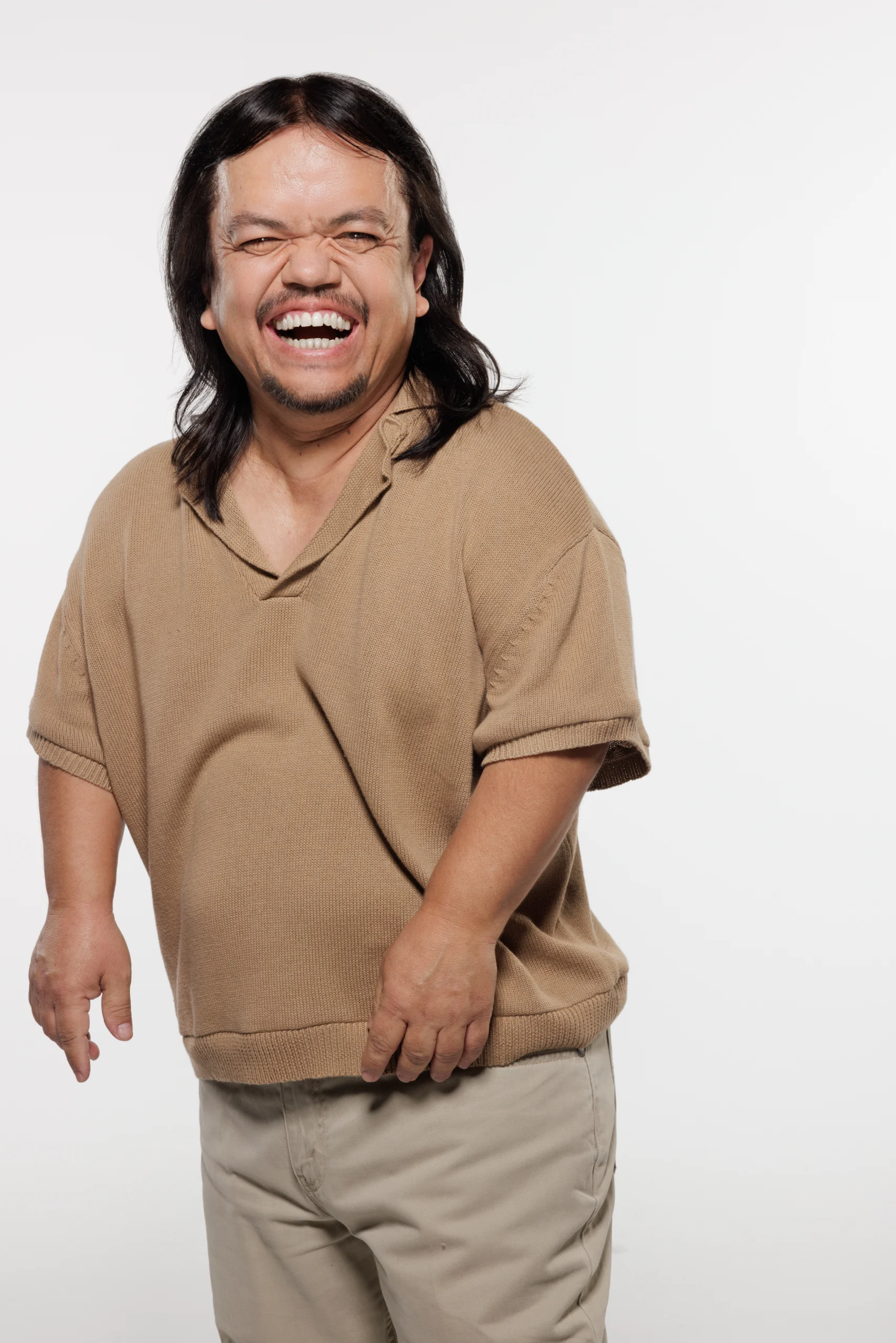
We have already seen God’s great care and lovingkindness for the disabled, and in light of this, what should the church’s response be? How can we love the disabled in the way that God does?
God has set up the church as an institution to administer his mercy and grace on earth. In so far as a local church is able, it should offer resources, financial support, and aid to people with disabilities. In the way that King David ensured that Mephibosheth was taken care of and provided for, the church should be willing to take on a similar role. In doing so, we partner with God in revealing his goodness, care, and provision for the disabled to the world. Some practical means of accomplishing this is the church helping to cover medical expenses, surgeries, copays, and prescriptions if possible. A church or church parishioners could also provide driving assistance to and from medical appointments, the grocery store, Sunday services, and more. Most of all, the church should have euthanistic ministers who can deliver the sacraments to those unable to physically attend church.
Churches should evaluate whether their service is fully accessible for those who are disabled. This could include special seating and parking, sign language interpreters, braille bulletins, and other necessary arrangements. It is difficult to know what people’s specific needs are so asking people or conducting surveys about specific needs can be a tool to understanding. Many churches have started to stream their services online. This can be a wonderful point of connection for those physically unable to attend.
Likewise, churches should evaluate their children’s ministry for accessibility. Even if there are currently no children with disabilities in attendance, the children’s ministry should be prepared in advance, in so far as they are able, for new and visiting children with disabilities. An accessible children’s ministry might include allowing flexible participation, quiet areas or rooms, and clear channels for parents to discuss the individual needs of their children. Though finding volunteers is very challenging, it is helpful to have plenty available or on call in case a child needs special attention. And leaders should include materials for working with children with disabilities in their volunteer training.
Finally, churches should place importance in social connection with the disabled. Many have no means to get to church and limited social outlets. Building friendships based in love and mercy is meaningful to both parties. Such interactions allow us to grow in our sanctification as we work to understand each other. One of my most meaningful friendships came through building a relationship with a disabled coworker. I came to understand that she was lonely at work and didn’t have anyone to talk with, so I ate lunch with her often. When her mom was diagnosed with cancer, she felt comfortable enough to reach out to me for emotional support and prayer. I was honored that she chose me to pray for mom as she persevered through a difficult disease.
The way that we treat the most vulnerable members of our congregation is a reflection not only of whether we can follow the teachings and commands of Scripture but it is a reflection of whether we believe it. When Christ is alive and at work in us, we emulate him, by treating others as he did. All human life is sacred and valuable to God because we image him, and human worth does not come from one’s ability to function or contribute to society. Mephibosheth stands out among the pages of Scripture as being a recipient of God’s magnificent glory, exalted to sit as royalty at King David’s table. God’s remarkable provision and care came through David’s response to knowing God, and in the church age, we can be the same conduit of care and lovingkindness to not only the disabled but to the whole world.
Key Citations and References
Comprehensive Reference List
Citations
- Jeremy Bentham, A Fragment on Government, ed. J. H. Burns and H. L. A. Hart (Cambridge: Cambridge University Press, 1988), vii.
- Jaime L. Natoli et al., “Prenatal Diagnosis of Down Syndrome: A Systematic Review of Termination Rates (1995–2011),” Prenatal Diagnosis 32, no. 2 (2012): 142-53, https://doi.org/10.1002/pd.2910.